














Proposals for research into Ring Chromosome 20 Syndrome
We are inviting clinicians and scientists to submit proposals for a small pilot research project focused on Ring Chromosome 20 Syndrome. This call aims to seed fund small-scale novel studies that will enhance our understanding of this rare genetic disorder.
About Ring Chromosome 20 Syndrome
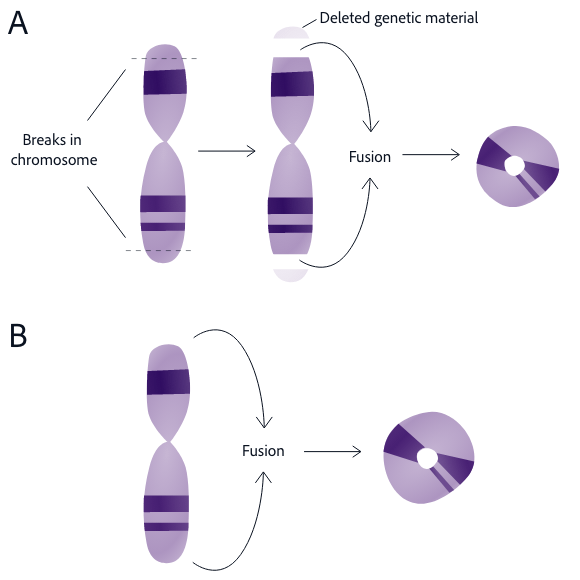
Ring Chromosome 20 Syndrome is a rare chromosomal disorder where a ring is formed by the ends of chromosome 20 fusing together. This condition is characterized by a range of symptoms, including epilepsy, cognitive impairment/decline, and behavioural changes following seizure onset. Due to its rarity and complexity, further study to broaden understanding of this rare condition is crucial – from improving diagnosis, to more effective treatments, to understanding impact and care needs.
Related literature
Tokumoto K, Nishida T, Ikeda H, Ikeda H, Kawaguchi N, Mizutani S, Yamaguchi T, Ohtani H, Yamazaki E, Usui N, Imai K, Inoue Y. Long-term seizure and psychosocial outcomes of patients with ring chromosome 20 syndrome: A cohort study of 47 cases. Epilepsia. 2025 Mar 22. doi: 10.1111/epi.18370. Epub ahead of print. PMID: 40119828.

Why More Studies Are Needed
There is very limited research published on Ring Chromosome 20 Syndrome [r(20) syndrome], with much of the medical literature comprising single case studies or small case series, with no follow-up.
The ring formation is not a complete diagnosis.
What causes the ring structure to form, and how does this genomic change result in the complex epilepsy phenotype that manifests seemingly after normal childhood development?
Individuals, and their families, are living their rare reality in real-time facing:
- a prolonged diagnostic odyssey (exacerbated by the introduction of next generation sequencing)
- no recommended treatments
- no prognostic information to inform disease progression and future care needs
So many unanswered questions remain because we lack the basic building blocks to foster meaningful research: no patient registry, no natural history, no cellular models (no-one has yet been able to grow iPS cells successfully in r(20)), no animal models, no molecular target(s), no clinical trials.
Funding Details
- Budget: Up to £80,000 for a maximum two-year project (opportunities for match funding may be sought)
- Usage: Funds are designated for salaries, project costs, and related expenses.
- Eligibility: Applicants must hold a permanent post at an eligible institution.
- Submission Limit: Only one application is permitted per centre.
Multi-centre applications or multi-national studies are strongly encouraged.
Ring20 Terms and Conditions will be made available at the Full Application stage.
Application Guidelines
Applications will be assessed on a 2-stage basis:
- Expressions of Interest (EOI)
- Full Application
In the EOI we want to hear from you…
How your proposal will help people with r(20) syndrome in 1, 5 and 10 years?
The EOI form comprises: PI details (+ co-applicants if applicable), budget, duration, abstract (max 300 words + references), research experience. We will also require a short CV to be attached.
- No Additional Material: Please refrain from sending a covering letter, additional material, supporting references, or directing the SAC to any external resources, such as personal or departmental websites.
- Word Limits: Adherence to word limits is mandatory. Non-compliance may lead to disqualification.
- Figures and Tables: These can be included for explanatory purposes in full applications only. Please use low-resolution figures to reduce file size.
- References: Limit to 10 in the Expressions of Interest form and 30 in the full application.
- Ethics: Whilst we cannot insist that applicants have ethics approval prior to application, Ring20 will need to be clear that the ethical framework is in progress at each review point.
Expressions of Interest are invited until the application deadline:
DEADLINE EXTENDED!
Friday, 12th September 2025
Plain English Summary
All full applications must include a plain English summary detailing:
- The background and objectives of the proposed research.
- Specific aims and methodologies to be employed (including patient recruitment).
- The significance and potential impact of the research, particularly for individuals affected by Ring Chromosome 20 Syndrome.
Selection Process
Given the limited funds, the selection process for proposals is highly competitive. The Ring20 International Scientific Advisory Committee (SAC) will evaluate applications at both the shortlisting and full application stages. Considerations will include:
- The candidate’s track record and potential (experience working with rare genetic epilepsies is favourable).
- The quality and relevance of the proposed project.
- ‘Value for money’ of the proposed project.
- The support and environment provided by the host institution.
Proposals that offer opportunities for match-funding (to extend the remit of the study) will be favourably considered.
We look forward to receiving innovative proposals that will contribute significantly to the understanding of Ring Chromosome 20 Syndrome and potentially improve the lives of those affected by it.