














Watch our webinar to find out what’s going on in research in r(20), filmed 8th September 2025.
From past initiatives, to current active studies and where we are heading into the future…stay informed.
With great Q&A with some of our member families – no question is a stupid question!
We are always listening to our members to find out what they want to hear about next and importantly, what research is a priority for them. This will help shape our service delivery and research agenda as we move forward.
Nothing about us, without us
To view this video with subtitles in a language of your choice, please select:
- Settings (in the bottom right hand corner of the YouTube screen)
- subtitles
- auto-translate
- then select the language of your choice from the drop-down list
ACTIVE RESEARCH
We’ve created a list of ACTIVE research studies/projects into r(20) including a brief overview of the study and current status.
International
Commenced: January 2025
CURRENT STATUS: Awaiting acceptance of submission to Epilepsia
A Task Force from our Ring20 Scientific Advisory Board are working on a consensus statement relating to treatments for r(20) syndrome to guide healthcare professionals when treating patients and to call for more research into this area.
For more information contact: Ken Myers
UK only
Commenced: September 2025
CURRENT STATUS: Initial results available from sequencing, deeper analysis underway
This study is seeking individuals living with r(20) with high level mosaicism. The team will be sequencing, genomes using Oxford Nanopore Technologies.
For more information contact: Hannah Titheradge
International
Commenced: January 2025
CURRENT STATUS: Draft produced awaiting review prior to submission
A Task Force from our Ring20 Scientific Advisory Board are working on a consensus statement relating to diagnosis for r(20) syndrome to guide healthcare professionals when diagnosing patients (specifically around key signs and symptoms and appropriate diagnostic testing) and to call for more research into this area.
For more information contact: Bill James
INTERNATIONAL
Commenced: August 2023
CURRENT STATUS: Drafting submission for publication
Data was collected from families living with r(20) syndrome via semi-structured interviews, to try to understand the wider impact of living with r(20) syndrome.
More information about this study can be found here: https://ring20researchsupport.co.uk/r20-me-survey/
INTERNATIONAL
Commenced: February 2023
CURRENT STATUS: Drafting submission for publication
Research published on Ring Chromosome 20 has historically centred on information gathered by doctors from medical records or reports, and studies have typically been limited to small numbers of patients at a specific point in each patient’s lifetime. By collecting experiences directly from individuals or their parents/caregivers we want to see if your experiences can add any new knowledge to what has been documented about living with r(20).
More information on this study can be found here: https://ring20researchsupport.co.uk/patient_survey/
INTERNATIONAL (Mostly recruiting from within USA)
Commenced: May 2025
CURRENT STATUS: ON HOLD – awaiting funding
This study is currently in sample collection stage. Funding designated by CHOP for this study has since been reallocated, so the research team are seeking new funds to continue the project.
The team will be karyotyping all the samples prior to sending for sequencing, as they want to select trios that have the highest percent rings.
For more information contact: Carolina Montano <[email protected]>
NATIONAL (UK only)
Commenced: February 2023
CURRENT STATUS: Analysis of results
The scientific partnership will work on unravelling the genomes of r(20) patients to identify new cases and develop effective diagnostic test for the future.
Samples have been collected via the NIHR BioResource and have been sent to Illumina to commence their R&D
International
Commenced: TBA
CURRENT STATUS: Planning
This study plans to gain an understanding of SUDEP awareness and mortality risk. for people living with r(20) syndrome. Findings are planned to be written into a publication.
For more information contact:
RECENTLY COMPLETED RESEARCH
We’ve created a list of recently completed research studies/projects into r(20) including a brief overview of the study and current status.
INTERNATIONAL
Commenced: February 2025 Completed: August 2025
CURRENT STATUS: Abstract accepted by Epilepsia
“Ring chromosome 20 is a rare genetic syndrome characterized by epilepsy, intellectual disability, and other neurodevelopmental abnormalities. Seizures in ring chromosome 20 are often drug-resistant and debilitating. For patients with drug-resistant epilepsy, non-medical options are often considered; however, the efficacy of these interventions is not well-understood. We investigated the utility of vagus nerve stimulation in people with ring chromosome 20 in this retrospective case series. Patients were identified from our research/clinical databases, and with the assistance of a patient support group. Patients and/or caregivers were interviewed by phone or video teleconference. Data collected included demographics, epilepsy characteristics, and response to medical and non-medical treatments, including vagus nerve stimulation. Fourteen patients were included in the study. 11/14 reported some improvement in epilepsy following vagus nerve stimulator implantation, including five with reduced seizure frequency, three with shorter seizure duration, three with reduction or elimination of non-convulsive status epilepticus or specific seizure types, two with reduced need for rescue medication, and two shorter post-ictal signs/symptoms. Two patients were reported to have improved cognitive function and one a reduction in aggressive behaviour. Overall, vagus nerve stimulation appears to be an effective treatment for some patients with ring chromosome 20 and drug-resistant epilepsy.”
Results to be presented at a conference soon.
For more information contact: Kenneth Myers, Dr <[email protected]>
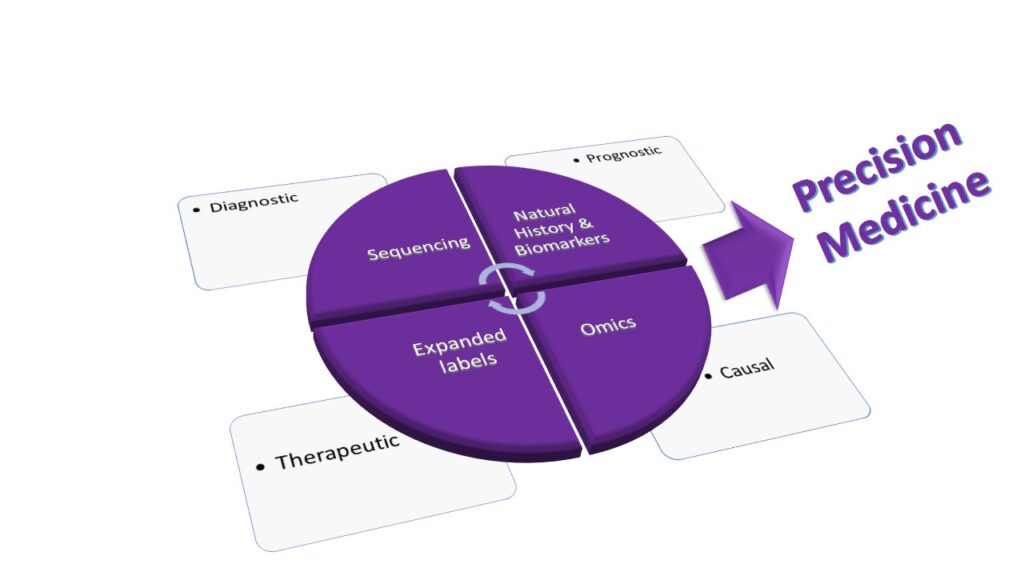
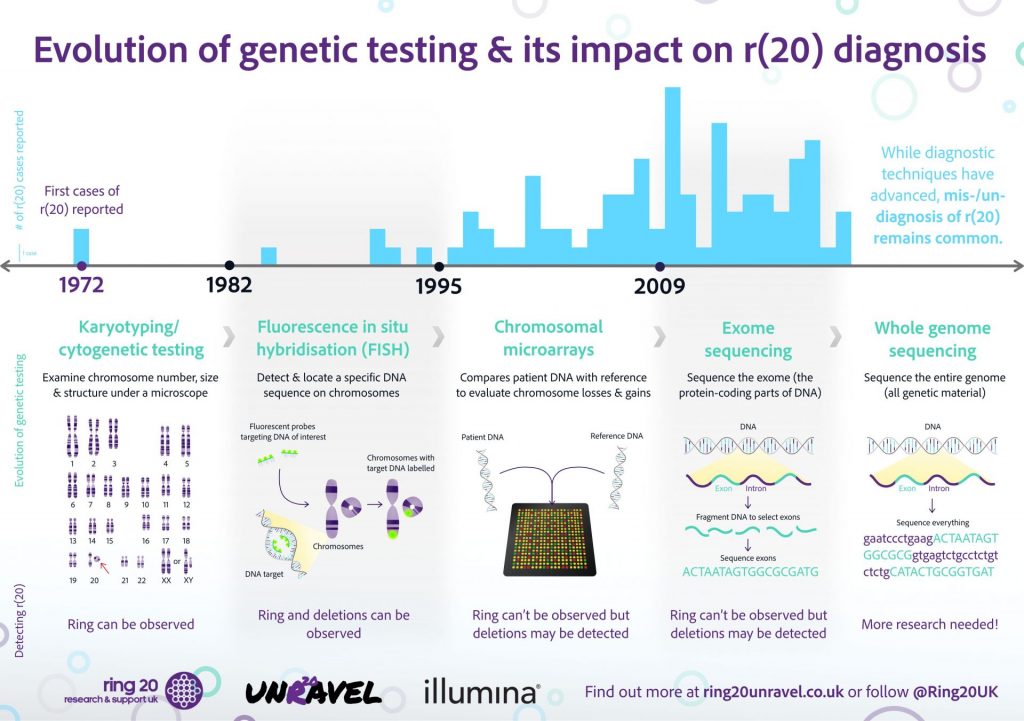
We are in active ongoing discussions with various genomic sequencing companies about how they might be able to help us to identify the genomic change(s) that cause the ring chromosome. Finding the answers to this is important, as the ring is not a complete diagnosis in itself.
Uncovering the genomic change that has caused the ends of the chromosome to stick together may help us to make diagnosis easier and find more effective treatments.
Lacking basic scientific knowledge
No CELLULAR MODELS
No ANIMAL MODELS
No MOLECULAR TARGET(S)
No CLINICAL TRIALS
No DRUG REPURPOSING
We would like to explore the feasibility to be able to successfully create iPS cells for ring chromosome 20,
so that we can have a cellular model for novel treatment experimentation.
Lacking basic data collection
No
PATIENT REGISTRY
No
NATURAL HISTORY
No
OMICS DATA
No BIOMARKERS
NO RECOMMENDED TREATMENTS
INACTIVE RESEARCH
We’ve created a list of INACTIVE research studies/projects relating to r(20) including a brief overview of each study/project.
NATIONAL (UK only)
Commenced: June 2022
CURRENT STATUS: HALTED
Recruitment of individuals to provide blood samples and phenotype (symptom information) relating to rare disease patient cohorts was discontinued as part of a funding restructure within the NIHR BioResource as of 1st October 2024. Up until this point, no active recruitment of ring chromosome patients had been undertaken.
Children under 16 years of age can still be recruited into the D-CYPHER study. This is ongoing and not impacted by the change of focus by the BioResource.